

In recent years, many noncitizens encountered by U.S. Immigration and Customs Enforcement have been released from custody under a document called Form I-220A, Order of Release on Recognizance. While being released from detention is often a relief, the legal consequences of an I-220A can be confusing and, if misunderstood, extremely serious.
Understanding what Form I-220A is, what it is not, and how it affects your immigration case is critical. This document can determine whether you are considered detained or released, whether you may be eligible for certain forms of relief, and what obligations you must follow to avoid re detention or removal.
What Is Form I-220A?
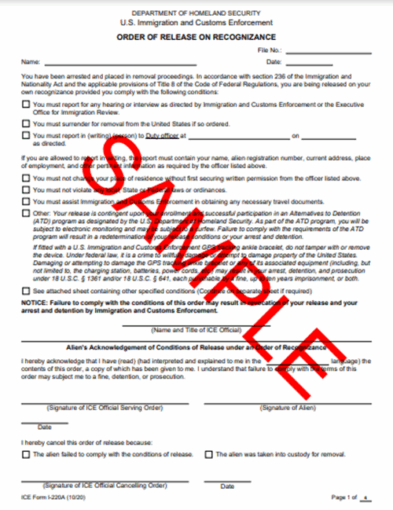
Form I-220A, Order of Release on Recognizance, is a document issued by ICE when a person is released from immigration custody without posting a monetary bond. By signing the form, the individual promises to comply with specific conditions set by ICE.
An I-220A is not a grant of lawful status. It does not provide work authorization, a visa, or permanent residency. Instead, it is a conditional release from physical detention while immigration proceedings continue or while ICE decides how to proceed with the case.
In simple terms, Form I-220A allows ICE to release someone from custody while still maintaining legal control over them.
How Is I-220A Different From an Immigration Bond?
Many people mistakenly believe that release under Form I-220A is the same as being released on bond. It is not.
An immigration bond typically involves a monetary payment and may be ordered by an immigration judge. A bond often provides clearer procedural protections and, in some situations, stronger arguments that the individual is no longer considered detained.
By contrast, an I-220A is issued solely by ICE. No money is posted, and ICE retains broad discretion to impose conditions or revoke the release at any time. This distinction has become especially important in recent litigation involving eligibility for adjustment of status and other relief.
Common Conditions of Release Under Form I-220A
When ICE issues Form I-220A, it usually includes conditions that must be strictly followed. These may include:
-
Reporting to ICE regularly in person or by phone
-
Wearing an ankle monitor or using other electronic monitoring
-
Not traveling outside a specific geographic area without permission
-
Attending all immigration court hearings
-
Complying with any future ICE instructions
Failure to comply with any condition can result in immediate re detention without warning. In some cases, even minor misunderstandings or missed check ins can trigger serious consequences.
Who Typically Receives Form I-220A?
Form I-220A has been commonly issued to individuals who:
-
Entered the United States without inspection and were apprehended
-
Presented themselves at or near the border and were processed by DHS
-
Are placed into removal proceedings but not held in long term detention
-
Are deemed by ICE to not require a bond at the time of release
In recent years, I-220A has been frequently used for individuals released from border processing facilities, including asylum seekers, particularly in Florida and other southern states.
Legal Consequences and Ongoing Court Issues
One of the most important aspects of Form I-220A is how it affects a person’s legal classification under immigration law. Courts and agencies have debated whether individuals released on I-220A are considered “paroled” into the United States or merely released from custody.
This distinction matters because parole can be a key requirement for eligibility for certain immigration benefits, including adjustment of status through a family petition.
ICE often argues that I-220A is not parole. Some immigration judges and courts have agreed, while others have questioned the government’s position depending on the facts of the case. The law in this area continues to evolve, and outcomes can vary by jurisdiction.
Because of this uncertainty, anyone released on I-220A should seek legal advice before filing applications that depend on parole or admission.
Does Form I-220A Mean Removal Proceedings Have Ended?
No. In most cases, individuals released on Form I-220A are still in removal proceedings or will be placed in proceedings shortly after release.
You may receive a Notice to Appear in immigration court, or you may already have one. Even if you have not yet received court paperwork, ICE can still initiate proceedings later. Release under I-220A does not mean your case is over.
Ignoring court notices or assuming the case has been resolved can result in a removal order issued in your absence.
What Happens If You Violate an I-220A?

Violating the terms of an Order of Release on Recognizance can have immediate and severe consequences. ICE has the authority to re arrest and detain you without a hearing if it believes you violated any condition.
In addition, violations can negatively impact future bond requests, discretionary relief, and credibility in immigration court. Even if the violation was unintentional, the consequences can be the same.
The ICE Form I-220A Process: Step by Step
The Form I-220A process begins when ICE takes a noncitizen into immigration custody and later decides to release them without requiring a monetary bond. Although release can feel like the end of detention, the I-220A process is really the start of a different phase of immigration enforcement.
Step 1: Apprehension or Initial ICE Custody
The process usually starts when a person is apprehended by immigration authorities. This may occur:
-
At or near the U.S. border
-
After an encounter with Border Patrol or ICE
-
Following a transfer from another agency
-
During a workplace, home, or community enforcement action
Once in custody, ICE evaluates whether the person will remain detained, be released on bond, or be released under supervision.
Step 2: ICE Determines Eligibility for Release Without Bond
ICE has discretion to release someone without requiring a bond payment. Factors ICE may consider include:
-
Identity verification
-
Family ties or community presence
-
Prior immigration history
-
Criminal history or lack thereof
-
Perceived flight risk or public safety concerns
If ICE decides that detention is not necessary but still wants ongoing control, it may issue Form I-220A instead of setting a bond.
Step 3: Issuance of Form I-220A Order of Release on Recognizance
ICE then prepares and issues Form I-220A. This document outlines:
-
The individual’s identifying information
-
The fact that they are being released from ICE custody
-
The specific conditions of release
-
The individual’s obligation to comply with all ICE instructions
The individual must sign the form, acknowledging the conditions and agreeing to comply.
Signing the form does not grant lawful status and does not end removal proceedings.
Step 4: Release From Physical Detention
After Form I-220A is issued and signed, the individual is physically released from custody. Release may occur:
-
Directly from an ICE detention facility
-
From a border processing center
-
After transfer to a local ICE office
At this point, the person is no longer detained but remains under ICE supervision.
Step 5: Compliance With Ongoing ICE Conditions
Once released, the individual must strictly follow all conditions listed on the I-220A. These often include:
-
Regular check ins with ICE
-
Attendance at all immigration court hearings
-
Geographic travel restrictions
-
Electronic monitoring, if required
-
Immediate notification of address changes
Failure to comply with any condition can result in re arrest and detention without a bond hearing.
Step 6: Immigration Court Proceedings Continue or Begin
In most cases, individuals released on Form I-220A are placed into removal proceedings. This may happen before or after release.
The person may receive a Notice to Appear scheduling immigration court hearings. During this stage, they may apply for relief such as:
-
Asylum
-
Cancellation of removal
-
Family based adjustment of status, if eligible
-
Other forms of defense against removal
The existence of an I-220A can affect legal strategy, especially in cases where parole or admission is legally significant.
Step 7: Ongoing ICE Discretion
Even after release, ICE retains broad authority. ICE can:
-
Modify release conditions
-
Add monitoring requirements
-
Re detain the individual
-
Continue supervision indefinitely
This is why Form I-220A is often described as conditional freedom rather than a final resolution.
Why the I-220A Process Requires Legal Guidance

The I-220A process involves discretion, evolving case law, and serious consequences for mistakes. Many people assume release means safety, but a single missed check in or misunderstanding can undo everything.
An immigration attorney can help ensure:
-
Full compliance with ICE conditions
-
Proper handling of court proceedings
-
Strategic planning for relief options
-
Protection against unnecessary re detention
Understanding the I-220A process early can prevent costly and life changing errors later.
Final Thoughts
Being released from immigration custody under Form I-220A can feel like a second chance, but it is not the end of the process. It is a conditional release that requires careful compliance and informed legal planning.
If you or a loved one has been released on an Order of Release on Recognizance, do not assume all releases are the same or that time alone will resolve the case. The decisions you make next can directly affect your ability to remain in the United States.
Speaking with a qualified immigration attorney as early as possible can make all the difference in protecting your rights, your freedom, and your future.