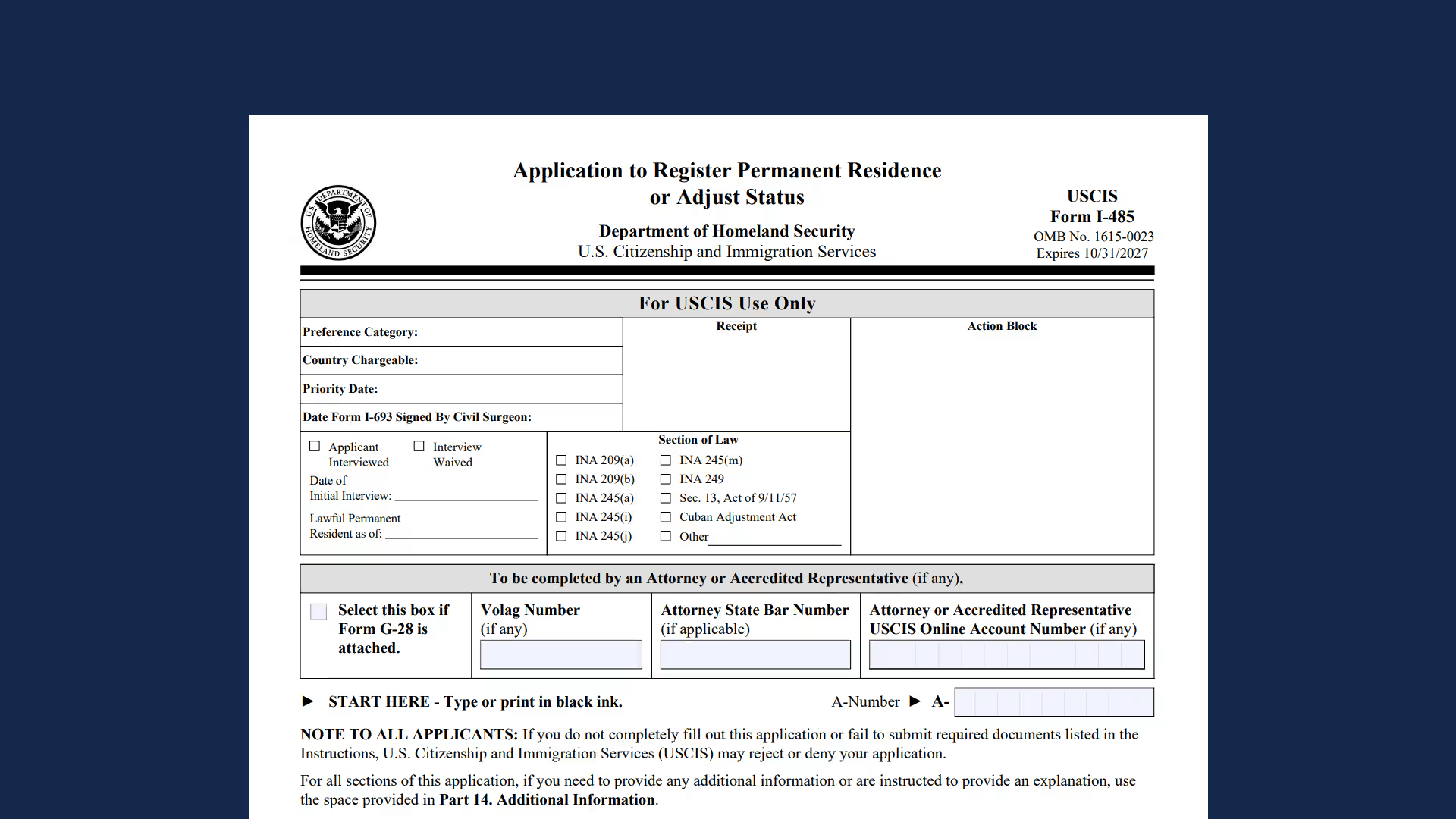
Filing Form I-485, Application to Register Permanent Residence or Adjust Status, is one of the most important steps many immigrants take on the path to becoming lawful permanent residents in the United States. For people living in Jacksonville, Duval County, St. Augustine, Orange Park, Fernandina Beach, and the surrounding Northeast Florida area, adjustment of status can mean obtaining a green card without leaving the United States.
But the process is not always simple.
USCIS states that Form I-485 is used by people who are in the United States and applying for lawful permanent resident status. The broader adjustment of status process allows certain eligible applicants to apply for a green card from inside the country instead of going through immigrant visa processing at a U.S. consulate abroad. (USCIS)
That distinction matters. A person who files too early, files under the wrong category, leaves the United States without proper travel authorization, misunderstands unlawful presence issues, or fails to disclose a past immigration problem may face delays, a Request for Evidence, denial, or even removal risks.
An experienced I-485 adjustment of status lawyer in Jacksonville can help determine whether you are eligible, what risks may apply, what evidence USCIS expects, and whether adjustment of status is the right path compared with consular processing.
Rebecca Black Law, P.A. is a Jacksonville-based immigration law firm that assists individuals, families, and businesses with green cards, family immigration, naturalization, visas, asylum, and removal defense.
What Is I-485 Adjustment of Status?
Adjustment of status is the process of applying for lawful permanent residence from inside the United States. Instead of leaving the country to attend an immigrant visa interview at a U.S. embassy or consulate, an eligible applicant may file Form I-485 with USCIS while physically present in the United States.
For many applicants, Form I-485 is not the first step. It is usually connected to an underlying immigrant category. That category may be based on a family relationship, employment opportunity, humanitarian classification, asylum or refugee status, diversity visa selection, or another basis recognized under U.S. immigration law.
For family-based cases, adjustment of status is often connected to Form I-130, Petition for Alien Relative. USCIS explains that some relatives must wait for an immigrant visa number to become available before filing Form I-485, while immediate relatives of U.S. citizens generally have immigrant visas immediately available. (USCIS)
This is one reason legal review matters. Two people may both be married to U.S. citizens, but their cases can look very different depending on how they entered the United States, whether they overstayed a visa, whether they have prior removal orders, whether they worked without authorization, or whether they have criminal history.
For a broader comparison, you may also want to read our guide on consular processing vs. adjustment of status for families.
Who Commonly Files Form I-485?
Many Jacksonville applicants file Form I-485 through a family-based immigration case. This may include spouses of U.S. citizens, parents of adult U.S. citizens, unmarried children under 21 of U.S. citizens, or certain relatives in family preference categories.
Others file based on employment. This may include workers with approved immigrant petitions, professionals moving from a work visa to a green card, investors, or individuals with specialized qualifications. Some applicants file after asylum approval, refugee admission, special immigrant classification, VAWA self-petition approval, U visa eligibility, or another humanitarian basis.
The key issue is not simply whether a person wants a green card. The question is whether that person qualifies for adjustment of status under a specific legal category and whether any bars, inadmissibility grounds, or timing issues apply.
USCIS Policy Manual guidance explains that adjustment applicants must generally have an immigrant category that allows adjustment, must be physically present in the United States, must have an immigrant visa immediately available when required, and must be admissible unless a waiver or exception applies. (USCIS)
If you are unsure which green card category applies to you, start with our overview of different green card categories and then speak with an immigration attorney about your specific facts.
When Can You File Form I-485?
Timing is one of the most common areas where applicants make mistakes.
Some applicants can file Form I-485 at the same time as the immigrant petition. This is called concurrent filing. USCIS explains that concurrent filing is available only for certain applicants who are physically present in the United States and seeking adjustment of status. It does not apply to consular processing cases. (USCIS)
Immediate relatives of U.S. citizens often file Form I-130 and Form I-485 together, assuming they otherwise qualify. This is common in marriage-based green card cases. However, family preference applicants and many employment-based applicants may need to check whether a visa number is available before filing.
The Department of State’s monthly Visa Bulletin controls visa availability for many family and employment categories. The bulletin uses “Final Action Dates” and “Dates for Filing” charts, and USCIS separately announces which chart adjustment applicants must use each month. (Travel.State.gov)
This can be confusing, especially for applicants from countries with long backlogs. Filing too early can lead to rejection. Filing too late can create missed opportunities. A Jacksonville adjustment of status lawyer can review your category, priority date, country of chargeability, and current Visa Bulletin to determine whether filing is available.
Adjustment of Status vs. Consular Processing
Adjustment of status and consular processing can both lead to a green card, but they are different procedures.
Adjustment of status happens inside the United States through USCIS. Consular processing happens through the Department of State, usually at a U.S. embassy or consulate abroad. For some people, adjustment of status is safer and more convenient. For others, consular processing may be the only available option.
This decision should not be based only on convenience. Leaving the United States can trigger serious immigration consequences for some applicants, especially those with unlawful presence, prior overstays, previous removal orders, or other inadmissibility concerns. USCIS explains that unlawful presence can create three-year or ten-year bars to admission after departure in certain cases. (USCIS)
For example, a person who entered with inspection and overstayed may have one set of options. A person who entered without inspection may have a different set of options. A person who has a prior deportation order may face still another set of risks.
Before leaving the United States for a consular interview, it is important to understand whether a waiver is needed. You can learn more in our article on the 601 waiver for unlawful presence.
When Do You Need an I-485 Adjustment of Status Lawyer in Jacksonville?
Not every immigration case has the same level of risk. Some applicants have straightforward facts, strong documentation, and clear eligibility. Others face problems that may not be obvious until USCIS begins reviewing the case.
You should strongly consider working with an I-485 adjustment of status lawyer if any of the following issues apply.
You Have an Overstay or Status Violation
Many applicants worry that overstaying a visa automatically prevents them from adjusting status. The answer depends on the category and facts.
Immediate relatives of U.S. citizens may have certain protections for overstays or unauthorized employment, but those protections do not apply to every category. Family preference applicants, employment-based applicants, and others may face stricter rules. A person who assumes the rules are the same for all green card applicants may file a case that is not approvable.
Overstay questions are especially common in marriage-based cases. If this applies to you, our article on visa overstay and marriage may help you understand some of the issues before filing.
You Entered the United States Without Inspection
Entry without inspection is one of the most serious adjustment issues. In many cases, a person must have been inspected and admitted or paroled into the United States to adjust status under section 245(a). There are exceptions and special rules for certain applicants, but this is not an area where you should guess.
Some people may qualify through parole in place, VAWA, asylum, U visa-related pathways, TPS-related arguments, or other legal strategies. Others may need consular processing with a waiver. The correct strategy depends on the full history.
A lawyer can review how you entered, what documents you have, whether you were ever paroled, whether any special category applies, and whether adjustment is legally possible.
You Have Criminal History
Criminal history can affect adjustment of status even if the case was dismissed, expunged, reduced, or happened years ago. USCIS asks detailed questions about arrests, charges, citations, convictions, pleas, and conduct.
The immigration definition of a “conviction” can be different from how state criminal courts describe a case. A Florida case that seems minor may create immigration problems if it involves controlled substances, theft, fraud, domestic violence, firearms, or crimes involving moral turpitude.
Before filing Form I-485, an attorney should review certified court dispositions, arrest reports when needed, plea documents, probation records, and the immigration consequences of the offense.
Failing to disclose criminal history is often worse than disclosing it properly. USCIS can treat omissions as misrepresentation, which may create additional problems.
You Have Prior Immigration Denials or Removal Orders
If you previously applied for a visa, asylum, green card, work permit, waiver, or other immigration benefit, that history matters. USCIS may compare your new filing with prior applications, interview statements, consular records, asylum testimony, border statements, and previous evidence.
Prior removal orders are especially serious. Some applicants do not realize they were ordered removed because they missed a court date or signed documents at the border years earlier. Filing Form I-485 without addressing a prior order can create serious consequences.
If you or a family member has been placed in immigration court, read more about deportation defense in Jacksonville and Duval County.
You Have Immigration Fraud or Misrepresentation Concerns
USCIS carefully reviews whether an applicant ever lied, used false documents, entered into a fraudulent marriage, misrepresented employment, failed to disclose prior immigration history, or gave incorrect information to obtain an immigration benefit.
Misrepresentation can make a person inadmissible. Some applicants may qualify for a waiver, but waiver eligibility is fact-specific and usually requires strong evidence of qualifying hardship.
This is another reason the I-485 process is not just paperwork. A lawyer can identify potential misrepresentation issues before USCIS does and help determine whether the case requires a waiver, explanation, legal brief, or alternative strategy.
You Need a Waiver of Inadmissibility
Some applicants are eligible for adjustment of status only if USCIS also approves a waiver. Waivers may be needed for unlawful presence, certain criminal issues, fraud or misrepresentation, health-related grounds, or other inadmissibility problems.
A waiver is not a simple apology letter. It usually requires legal analysis, supporting evidence, hardship documentation, family records, medical evidence when relevant, financial documentation, country condition evidence, and a clear explanation of why the law allows approval.
If a waiver may be needed, you should speak with an immigration lawyer before filing Form I-485. Filing first and hoping the issue does not come up can lead to avoidable risk.
You Received a Request for Evidence
A Request for Evidence, often called an RFE, means USCIS needs more information before deciding the case. It does not automatically mean denial, but it should be handled carefully.
Common I-485 RFEs may involve missing civil documents, incomplete financial sponsorship evidence, insufficient proof of a real marriage, unclear immigration history, missing medical exam documentation, or questions about eligibility.
Responding with disorganized documents or incomplete explanations can make the problem worse. USCIS may deny the case if the response does not fully address the request by the deadline.
For more detail, review our guide on how to respond to a Request for Evidence.
You Are Filing a Marriage-Based Adjustment Case
Marriage-based green card cases are common, but that does not mean they are easy. USCIS reviews whether the marriage is legally valid and whether it was entered into in good faith.
Evidence may include joint leases, bank accounts, insurance records, tax filings, photographs, travel records, messages, affidavits, birth certificates of children, and proof that the couple shares a real life together. USCIS may also schedule an interview and ask detailed questions.
Marriage-based cases become more complex when the couple has limited joint documents, lives separately, has a large age difference, married soon after entry, previously filed for someone else, has prior divorces, or has inconsistent statements in the immigration history.
You may also want to read our article on understanding marriage-based immigration in the United States.
You Are Unsure Whether You Can Work or Travel While I-485 Is Pending
Many adjustment applicants also file for employment authorization and advance parole. USCIS has separate forms for these benefits. Form I-765 is used to apply for employment authorization, and Form I-131 is used for certain travel documents, parole documents, and arrival/departure records. (USCIS)
Travel is a particularly sensitive issue. USCIS explains that advance parole is commonly used by someone with a pending Form I-485, but leaving the United States without proper authorization can create problems. (USCIS)
Applicants should not assume that a pending green card application automatically allows travel. They should also not assume that advance parole eliminates all risks, especially if they have unlawful presence, prior removal orders, criminal history, or other inadmissibility concerns.
If work authorization is important to your family or job, review our article on the difference between an EAD, H-1B, and permanent residence.
What Documents Are Usually Needed for Form I-485?
The required documents depend on the category, but many I-485 filings include identity documents, passport-style photos, birth certificate, passport biographic page, visa page, I-94 record, proof of lawful entry, proof of current or prior immigration status, underlying immigrant petition approval or concurrent petition, financial sponsorship documents when required, medical examination, and evidence related to the applicant’s eligibility category.
Family-based applicants often need proof of the qualifying relationship. Marriage-based applicants need evidence that the marriage is real. Employment-based applicants may need job offer evidence, supplement forms, or records connected to the employer and immigrant petition.
USCIS uses Form I-693 for the immigration medical examination and vaccination record. USCIS states that adjustment applicants use Form I-693 to establish that they are not inadmissible on health-related grounds. (USCIS)
As of current USCIS guidance, many applicants required to submit Form I-693 must submit it with Form I-485. USCIS announced this requirement in late 2024, which is why applicants should check current instructions before filing. (USCIS)
What Happens After Filing Form I-485?
After USCIS receives the I-485 package, the applicant typically receives receipt notices. USCIS may then schedule biometrics for fingerprints, photos, and background checks. If the applicant filed for a work permit or advance parole, USCIS may process those applications separately while the I-485 remains pending.
USCIS may issue an RFE if evidence is missing or unclear. In many cases, USCIS schedules an adjustment interview. At the interview, an officer may review the application, confirm identity, ask questions about eligibility, examine relationship evidence, and discuss any immigration or criminal history.
Marriage-based applicants may face detailed questions about the relationship. Employment-based applicants may be asked about the job offer. Humanitarian applicants may be asked about the underlying basis for adjustment and any changes since approval of the original status.
For interview preparation, see our article on tips for a successful green card interview.
Common Mistakes in I-485 Adjustment of Status Cases
One common mistake is filing the wrong edition of a form or using outdated instructions. USCIS periodically updates forms and filing requirements. Applicants should always check the official USCIS Form I-485 page before filing.
Another mistake is failing to include required evidence. A missing birth certificate, incorrect translation, incomplete affidavit of support, missing medical exam, or unclear proof of entry can delay a case or trigger an RFE.
Applicants also make mistakes with travel. Leaving the United States while Form I-485 is pending can be dangerous without advance parole or another valid travel basis. Even with advance parole, some applicants need legal advice before departing.
Another serious mistake is treating the I-485 as a simple form instead of a legal application. Form I-485 asks about immigration violations, arrests, organizations, prior applications, public charge issues, prior immigration fraud, security issues, and other sensitive subjects. Incorrect answers can create long-term problems.
How a Jacksonville I-485 Lawyer Can Help
An adjustment of status lawyer can do more than fill out forms. A lawyer can evaluate eligibility, identify risks, organize evidence, prepare the filing strategy, review prior immigration history, analyze criminal records, determine whether waivers are needed, and prepare the applicant for USCIS interviews.
A lawyer can also help decide whether adjustment of status is the best option. In some cases, consular processing may be necessary. In other cases, adjustment may be possible but only after a separate legal step. The right strategy depends on the applicant’s entry history, family relationship, visa category, priority date, admissibility, and long-term goals.
For Jacksonville-area families, local knowledge can also matter. While immigration law is federal, applicants often interact with USCIS offices, medical civil surgeons, local court systems, Florida criminal records, and Jacksonville-area documentation issues. A lawyer who regularly handles immigration cases in Northeast Florida can help applicants understand what to expect.
How Much Does Adjustment of Status Cost?
The total cost of adjustment of status depends on USCIS filing fees, medical exam costs, translation costs, attorney fees, and whether additional applications or waivers are needed.
Applicants should always check the official USCIS fee schedule before filing because government filing fees can change. Attorney fees also vary depending on complexity. A straightforward immediate relative case is different from a case involving unlawful presence, prior denials, criminal history, waivers, or removal proceedings.
For more detail on family-based immigration costs and planning, see our guide on family immigration fees, delays, and expectations.
Do You Need a Lawyer If Your Case Seems Simple?
Some people successfully file adjustment of status cases without a lawyer. However, many applicants do not know their case is complicated until something goes wrong.
A case may seem simple because the applicant is married to a U.S. citizen or has an approved petition. But USCIS still reviews admissibility, immigration history, criminal history, prior filings, financial sponsorship, medical eligibility, and supporting evidence.
You should consider at least scheduling a consultation if you have ever overstayed, worked without authorization, entered without inspection, used false information, been arrested, missed immigration court, filed asylum, been denied a visa, received public benefits, had prior marriages, sponsored someone before, or left and reentered the United States after unlawful presence.
A consultation can help you understand whether your case is truly straightforward or whether it needs a more careful legal strategy.
Why Choose Rebecca Black Law, P.A. for I-485 Help in Jacksonville?
Rebecca Black Law, P.A. assists clients with green cards, family immigration, employment immigration, humanitarian immigration, naturalization, and removal defense. The firm’s approach is focused on strategy, not just paperwork. Immigration cases often affect a person’s family, job, ability to travel, and future in the United States, so each case deserves careful review.
For adjustment of status applicants, this means looking beyond the forms. It means asking whether the applicant is eligible to file, whether the timing is correct, whether USCIS may question admissibility, whether a waiver is needed, whether the evidence is strong enough, and whether the applicant is prepared for the next step.
If you are in Jacksonville or Northeast Florida and considering Form I-485, legal guidance can help you avoid preventable mistakes and move forward with a clearer plan.
Frequently Asked Questions About I-485 Adjustment of Status in Jacksonville
What is Form I-485 used for?
Form I-485 is used to apply for lawful permanent resident status from inside the United States. USCIS describes it as the application to register permanent residence or adjust status. (USCIS)
Can I file Form I-485 if I am outside the United States?
No. Adjustment of status is for eligible applicants physically present in the United States. If you are outside the United States, you may need consular processing through the Department of State instead.
Can I file I-130 and I-485 at the same time?
Some applicants can. Immediate relatives of U.S. citizens often qualify for concurrent filing if they are otherwise eligible. Other family categories may need to wait until a visa number is available.
What happens if my priority date is not current?
If your category requires visa availability and your priority date is not current under the correct Visa Bulletin chart, you may not be able to file Form I-485 yet. Filing too early can result in rejection.
Can I work while my I-485 is pending?
A pending I-485 does not automatically give every applicant permission to work. Many applicants file Form I-765 for employment authorization while the I-485 is pending.
Can I travel while my I-485 is pending?
Travel can be risky. Many applicants need advance parole before leaving the United States. Some applicants should speak with an immigration attorney before traveling even if advance parole is approved.
Will USCIS interview me for adjustment of status?
Many applicants are scheduled for interviews, especially in marriage-based cases. Some interviews may be waived, but applicants should prepare as if USCIS may require one.
What if I receive an RFE?
You should read the RFE carefully and respond by the deadline with complete evidence. An incomplete response can lead to denial. Legal help is especially useful if the RFE raises eligibility, financial sponsorship, medical, relationship, or inadmissibility issues.
Can a past arrest affect my I-485?
Yes. Arrests and criminal records can affect adjustment of status, even if the case was dismissed or expunged. You should have an immigration lawyer review certified court records before filing.
Can I adjust status after overstaying a visa?
Sometimes. The answer depends on your category, relationship to the petitioner, immigration history, and other facts. Immediate relatives of U.S. citizens may have options that other applicants do not.
Speak With an I-485 Adjustment of Status Lawyer in Jacksonville
Form I-485 can be the final major step toward a green card, but it is also a serious legal filing. Before you submit your application, make sure you understand your eligibility, risks, documents, travel limits, work authorization options, and interview expectations.
Rebecca Black Law, P.A. helps immigrants and families in Jacksonville and throughout Northeast Florida navigate adjustment of status and other green card matters. Whether your case is straightforward or complicated by prior immigration history, overstays, criminal records, RFEs, or waiver issues, the right legal strategy can make a meaningful difference.
To discuss your case, contact Rebecca Black Law, P.A. and schedule a consultation with a Jacksonville immigration lawyer.